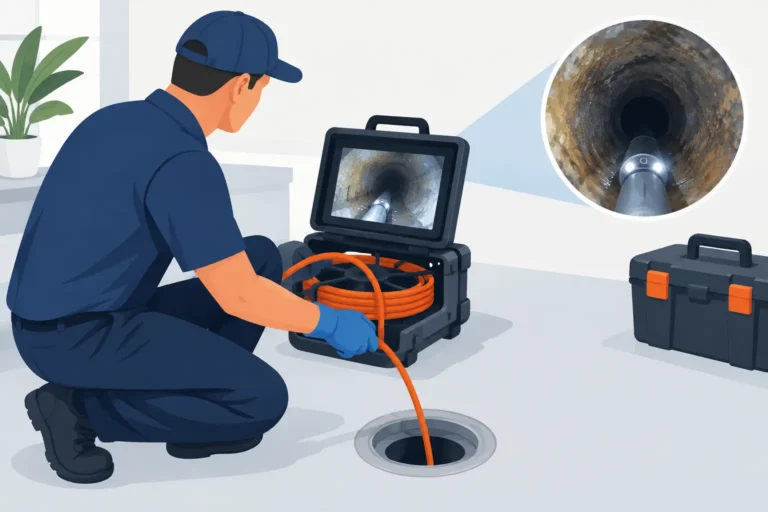

A slow drain can be more than an inconvenience. When several fixtures back up, a toilet gurgles after the washer drains, or water appears around a floor drain, the trouble may be farther down the pipe than a plunger or store-bought cleaner can reach. A drain line camera inspection lets a trained plumbing technician see what is happening inside the line before recommending a repair.
For homeowners, landlords, and business owners in Yankton, Vermillion, and the surrounding area, that clear view can prevent unnecessary digging, repeat clogs, and water damage. Instead of guessing whether the problem is grease, roots, a broken pipe, or a sagging section of sewer line, the camera provides evidence.
What a Drain Line Camera Inspection Does
A professional drain camera is a small waterproof camera attached to a flexible cable. The technician feeds it through an accessible drain opening, cleanout, or sewer line entry point. A live video feed shows the inside condition of the pipe as the camera moves through the system.
The goal is not simply to confirm that a drain is clogged. It is to identify the exact location and cause of the restriction. Many camera systems also include a locator, allowing the technician to determine where the camera is underground and how deep the line sits. That information matters if repair or replacement becomes necessary.
A camera inspection is especially useful because different problems need different solutions. Clearing a root-filled line may restore flow for a time, but a cracked or separated pipe may need repair to stop the roots from returning. Likewise, a heavy grease buildup in a commercial kitchen drain calls for a different plan than a collapsed section of old sewer pipe.
Signs Your Drain Problem Needs a Camera
One isolated slow sink does not always require a camera inspection. Hair, soap residue, or a small obstruction near the fixture may be cleared with routine drain cleaning. The situation changes when symptoms point to a larger or recurring issue.
A camera inspection is often the right next step when drains keep clogging after they have been cleared, multiple fixtures drain slowly, sewage backs up into a tub or floor drain, or you notice gurgling sounds from toilets and sinks. Persistent sewer odors, unusually green patches of grass above a buried line, and water collecting near the foundation can also signal a damaged underground pipe.
For a property purchase, an inspection can be a wise precaution as well. Older homes may have clay tile, cast iron, Orangeburg, or other aging drain materials. A line can look fine from the yard while developing internal scale, root intrusion, offsets, or weak spots below ground.
Repeated Clogs Are Not a Complete Diagnosis
Repeated clogs are frustrating, but they do not automatically mean the entire sewer line must be replaced. The issue could be a partial blockage, a poorly sloped section of pipe, or tree roots entering through one joint. A camera allows the technician to separate a cleanable obstruction from a structural problem.
That distinction protects your budget. It also helps avoid the opposite mistake: repeatedly paying to clear a line that has a pipe defect causing the blockage to return.
Problems a Camera Can Reveal
Drain cameras give technicians a close look at conditions that are otherwise hidden below a slab, basement floor, landscaping, parking area, or street connection. Common findings include:
- Tree root intrusion through joints, cracks, or aging pipe connections
- Grease, soap residue, mineral buildup, and other debris restricting flow
- Bellies or sags where a pipe holds water and waste instead of draining properly
- Cracks, corrosion, separated joints, crushed pipe, or a partial collapse
- Foreign objects, including wipes, hygiene products, toys, or construction debris
- Misaligned connections or pipe sections that have shifted due to settling
Not every camera image is an emergency. A small amount of buildup may be handled through professional cleaning and good maintenance habits. A severe offset, collapse, or active sewage backup deserves faster attention because wastewater can damage finishes, create sanitation concerns, and interrupt business operations.
What to Expect During the Inspection
Most inspections begin with a conversation about what you have noticed: when the backup occurs, which fixtures are affected, whether the issue is new or recurring, and what work has already been done. This history helps narrow down where to start.
The technician then identifies the best access point. In many homes, that is an exterior sewer cleanout. In other cases, access may be through a drain or another appropriate opening. The camera is fed into the line while the technician monitors the live footage and records key observations.
If the camera reaches a blockage, damaged area, or transition in the pipe, the technician can use locating equipment to mark the approximate position above ground. This is particularly helpful when planning excavation, trenchless repair, or a targeted spot repair. You should receive a plain-English explanation of what was found, what it means for the system, and which options make sense.
A camera inspection usually does not clear the blockage by itself. If the pipe is packed with debris, professional drain cleaning may be needed before the camera can travel the full length of the line. In some cases, cleaning first and inspecting afterward is the most accurate approach because it shows the actual condition of the pipe walls.
Why Professional Equipment and Experience Matter
Consumer inspection cameras can be useful for small, visible jobs, but they are not a substitute for professional sewer diagnostic equipment. A plumbing drain line may have long runs, sharp turns, standing water, and access limitations. A camera that gets stuck or cannot be accurately located may create more questions than answers.
An experienced technician also knows how to interpret the video. Roots, scale, standing water, pipe material changes, and minor imperfections can look alarming to an untrained eye. The right recommendation depends on the severity of the condition, the age and material of the line, the property layout, and whether the problem is affecting daily use.
At Larry’s Plumbing, Heating and Cooling, the focus is on explaining the findings honestly and recommending the repair that addresses the cause, not just the visible symptom. That may mean cleaning the line, repairing a section, planning a replacement, or monitoring a condition that is not yet urgent.
Camera Inspection, Drain Cleaning, and Repair: How They Work Together
A camera inspection is a diagnostic service. Drain cleaning is the process of removing obstructions and buildup. Repair or replacement corrects physical defects in the pipe. These services often work together, but they are not interchangeable.
For example, a main sewer line clogged with roots may need professional cleaning to restore drainage immediately. The camera can then show whether roots entered through a single damaged joint or whether the entire line is deteriorating. If the pipe is structurally sound, periodic maintenance may be a practical option. If it is cracked, collapsed, or badly separated, a repair plan will provide a more lasting result.
The best approach depends on what the camera finds and how often the issue has occurred. For a commercial property, the decision may also depend on operating hours, health requirements, and the need to keep restrooms or kitchen facilities available. A good plumbing partner will explain the trade-offs clearly before work begins.
Protecting Your Drain Lines Between Service Visits
No drain system is completely maintenance-free, but a few habits can reduce avoidable clogs. Keep grease, coffee grounds, food scraps, wipes, and hygiene products out of drains and toilets. Use strainers where appropriate, and address slow drains before they turn into a full backup.
Be cautious with chemical drain cleaners. These products may not remove the underlying obstruction, and repeated use can be hard on certain pipes and fixtures. If a drain is slow more than once, or several drains are involved, it is safer to have the line evaluated professionally.
A drain problem rarely improves by waiting. If you are seeing repeated backups, sewage odors, gurgling fixtures, or water where it does not belong, scheduling an inspection early can give you options before a small warning becomes a disruptive emergency.