Rooftop Units: The Workhorse of Commercial Comfort
When you manage a commercial building, the heating and cooling equipment on the roof rarely gets much attention until something goes wrong. A rooftop unit, often called an RTU, sits out of sight and out of mind, quietly moving conditioned air through a retail store, office suite, restaurant, or warehouse. But the moment that equipment struggles, everyone inside notices. Temperatures swing, humidity climbs, energy bills creep up, and customers or employees start to complain. That is why keeping rooftop units running well is one of the most practical investments a property owner can make.
At Larry's Plumbing, Heating and Cooling, we work with rooftop units across a wide range of commercial properties. As a family owned full service plumbing, heating and cooling business that has been in business since 1982, we have watched rooftop technology evolve from simple single-stage packages to sophisticated units with variable-speed compressors, economizers, and smart controls. That experience helps us keep older equipment alive while also installing the newer systems that lower operating costs.
What a Rooftop Unit Actually Does
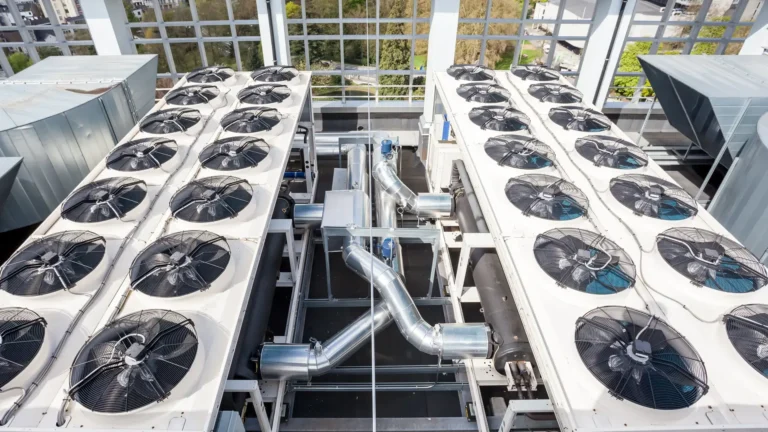
A rooftop unit is a self-contained package that combines heating, cooling, and air handling in a single cabinet installed on the roof. Because everything lives in one enclosure, the unit connects to the building through ductwork and electrical service instead of scattered indoor and outdoor components. This design saves interior floor space, keeps noisy equipment away from occupants, and simplifies maintenance access. For strip malls, office buildings, and industrial spaces, this approach has become the standard for good reason.
Inside the cabinet, the unit draws in return air from the building, mixes it with fresh outdoor air, filters it, heats or cools it, and pushes it back down through the supply ducts. Many modern rooftop units include an economizer, which is a set of dampers that bring in cool outside air when conditions allow. This feature can cut cooling costs substantially during mild weather by giving the compressor a rest. Understanding how these parts work together is the foundation of every repair and installation we perform.
Common Scenarios Where Rooftop Units Matter
No two commercial buildings put the same demands on their equipment. Over the years we have serviced rooftop units in settings that each present their own challenges:
- Retail and shopping centers: Multiple tenants often share a roof, each with a dedicated unit. Consistent temperature keeps shoppers comfortable and protects merchandise from humidity damage.
- Restaurants and food service: Kitchens generate heat and require careful balancing between exhaust, makeup air, and dining room comfort. A well-tuned rooftop system handles all three at once.
- Offices and medical suites: Air quality and steady temperature affect productivity and, in medical settings, patient comfort. Proper filtration and fresh air control matter greatly here.
- Warehouses and light industrial spaces: Large open areas need units sized to move big volumes of air efficiently, often with zoning to avoid wasting energy on unoccupied sections.
Each of these settings calls for a different approach to sizing, control strategy, and maintenance scheduling. We look at how a space is used before we recommend anything, because a unit that fits a warehouse would waste money on a small office and the reverse leaves a building uncomfortable.
Installation and Replacement Done Right
Replacing a rooftop unit involves more than lifting one box off and setting another in its place. The curb that the unit rests on must match the new cabinet, or an adapter curb must be fabricated. Electrical service, gas connections, and ductwork transitions all need to line up. We coordinate crane work, verify the roof structure can carry the load, and confirm that the new unit matches the building’s actual heating and cooling needs rather than simply copying the old capacity.
Correct sizing is one of the most important steps. An oversized unit short-cycles, wearing out components and leaving humidity in the air, while an undersized unit runs constantly and never catches up on hot days. We perform load calculations that account for square footage, insulation, window area, occupancy, and internal heat sources like kitchen equipment or machinery. Getting this right at installation saves money every month the unit operates.
Service, Repair, and Ongoing Maintenance
Rooftop units live in a harsh environment. Sun, rain, snow, and debris all take a toll year after year. Regular maintenance catches small problems before they turn into failures. During a service visit we inspect belts, bearings, motors, and electrical connections, clean coils, check refrigerant charge, test economizer operation, and replace filters. These simple steps extend equipment life and keep energy use in check.
When something does fail, fast response matters. We offer 24/7 emergency service because a dead rooftop unit in July or January cannot wait. We service all makes and models, so you are not left searching for a specialist who happens to know your brand. For property owners planning ahead, we offer free estimates and financing to make larger projects manageable. Whether you need a single repair, a full replacement, or a maintenance plan across Vermillion and Yankton, SD, the team at Larry's Plumbing, Heating and Cooling is ready to keep your rooftop equipment doing its job.