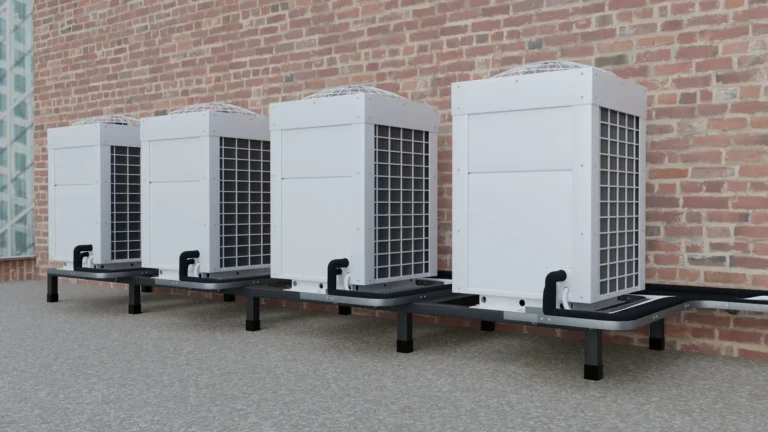

A single VRF system can heat one room while cooling another at the same time, moving refrigerant only where it is needed. This is the defining trait of Variable Refrigerant Flow technology, and it is one of the reasons these systems have become a popular choice for homes that need precise, zone-by-zone comfort. At Larry's Plumbing, Heating and Cooling, we install, service, and repair VRF systems for residential applications, and this page explains how the technology works and where it fits best.
How VRF Technology Works
A VRF system uses a single outdoor condensing unit connected to multiple indoor units through refrigerant lines. Instead of pushing a fixed amount of conditioned air through ductwork, the system adjusts the flow of refrigerant to match the exact load of each zone. When one room needs more cooling, the system sends more refrigerant to that area. When another room needs less, the flow drops. This modulation happens continuously, which keeps temperatures stable and reduces the energy spikes common with older equipment.
The heart of the system is an inverter-driven compressor. Unlike a traditional compressor that runs at full speed or shuts off completely, an inverter compressor ramps its speed up and down. This lets the system run at partial capacity for long stretches, which is where most of the energy savings come from. A home rarely needs 100 percent of its heating or cooling capacity, so a system that can run efficiently at 40 or 60 percent output matches daily demand far better.
Heat Pump Versus Heat Recovery Configurations
There are two main types of VRF systems, and choosing the right one depends on how your home is used. A heat pump VRF system provides either heating or cooling to all connected zones at once. This works well for homes where every room tends to need the same thing at the same time. A heat recovery VRF system, by contrast, can heat and cool different zones simultaneously. It captures heat removed from one area and moves it to another area that needs warmth.
Heat recovery becomes valuable in larger homes with rooms that behave differently. A kitchen with south-facing windows may need cooling in the afternoon while a shaded bedroom on the north side needs heat. A heat recovery system handles both at once and reuses energy in the process. During our free estimates, we assess your home’s layout, sun exposure, and daily use patterns to recommend the configuration that fits.
Why Homeowners Choose VRF
VRF systems solve several common comfort problems that traditional forced-air systems struggle with. Because each indoor unit is controlled independently, you can set different temperatures in different rooms without fighting over a single thermostat. The compact refrigerant lines also require far less space than bulky ductwork, which makes VRF a practical option for older homes, additions, and finished spaces where running ducts would be difficult.
Here are the main advantages we see homeowners value most:
- Zoned comfort: Set each room to its own temperature and avoid hot and cold spots throughout the house.
- Energy efficiency: Inverter compressors run at partial load most of the time, which lowers overall consumption.
- Quiet operation: Indoor units and the variable-speed compressor produce much less noise than conventional systems.
- Flexible installation: Slim refrigerant lines fit where ductwork cannot, which suits renovations and room additions.
- Simultaneous heating and cooling: Heat recovery models move energy between zones instead of wasting it.
Installation and Design Process
A VRF installation starts with a detailed load calculation for every zone. We measure each room’s heat gain and loss based on insulation, window area, ceiling height, and orientation. This step prevents oversizing, which wastes money and causes short-cycling. Once the loads are known, we select the outdoor unit capacity and choose indoor unit types, such as wall-mounted, ceiling cassette, or ducted air handlers, to match how each space is used.
After the design is set, we route the refrigerant piping, set the indoor and outdoor units, and commission the system with careful attention to refrigerant charge and controls programming. Proper commissioning matters because VRF systems depend on accurate refrigerant levels and correct electronic settings to deliver their rated efficiency. Our technicians at Larry's Plumbing, Heating and Cooling handle this process from start to finish, and we service all makes and models if you already have a VRF system installed by another contractor.
Service, Repair, and Ongoing Support
Like any HVAC equipment, VRF systems benefit from routine maintenance. We check refrigerant pressures, clean filters and coils, verify control operation, and inspect electrical connections. Keeping these systems tuned protects the compressor, which is the most valuable component, and preserves the efficiency you paid for.
We are a family owned full service plumbing, heating and cooling business that has been in business since 1982. When a problem arises, we offer 24/7 emergency service so you are not left without heating or cooling during extreme weather. We also provide free estimates and financing to make a new VRF system more accessible. Serving homeowners throughout Vermillion and Yankton, SD, Larry's Plumbing, Heating and Cooling brings decades of hands-on experience to every VRF project, whether you are planning a new installation or need a system you already own brought back to peak performance. Reach out to us to discuss whether VRF is the right fit for your home.