When Your Business Depends on Reliable Comfort
A restaurant with a dining room that runs too warm during the lunch rush, an office where staff complain about cold corners and stuffy conference rooms, a retail shop where customers do not linger because the air feels stale — these are the everyday problems that light commercial HVAC solves. When the comfort of your building affects your customers, your employees, and your bottom line, you cannot afford equipment that struggles or a contractor who does not understand the demands of a working space.
At Larry's Plumbing, Heating and Cooling, we focus on the practical realities of commercial buildings. Unlike a home, a light commercial property has to manage heavier occupancy, longer operating hours, and equipment loads that can change from one hour to the next. We are a family owned full service plumbing, heating and cooling business that has been in business since 1982, and over those decades we have installed and maintained systems for small businesses of nearly every kind. This page is written for commercial applications, and it walks you from the questions we hear most often toward the clear guidance you need to make a confident decision.
What Light Commercial HVAC Actually Covers
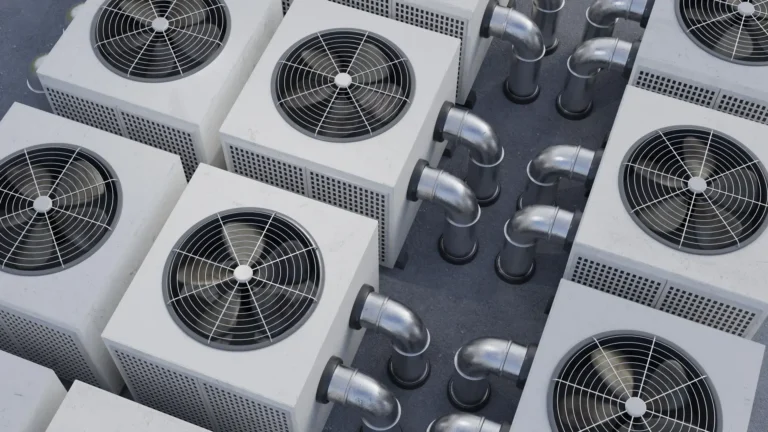
The term “light commercial” generally refers to buildings that need more capacity than a typical home but do not require the massive, centralized plants found in large industrial facilities or high-rise towers. Think offices, medical suites, restaurants, small warehouses, churches, retail stores, and multi-tenant buildings. Equipment in this category commonly ranges from about five to twenty-five tons of cooling capacity, and it often combines heating and cooling in a single packaged unit or a series of coordinated systems.
Many light commercial buildings rely on rooftop units, often called RTUs, because placing equipment on the roof saves valuable floor space and simplifies duct routing. Other properties use split systems, mini-split arrangements for individual zones, or hydronic components tied into boilers. We service all makes and models, so whether your building already has an aging rooftop unit or you are planning something new, we can work with what you have and advise on what will serve you best going forward.
Common Concerns Business Owners Bring to Us
The first concern we hear is almost always uptime. When a system fails in a commercial space, the effects are immediate: spoiled inventory, uncomfortable customers, or a workday lost to heat. Because of that, we offer 24/7 emergency service, so a breakdown at midnight or on a holiday weekend does not become a business emergency the next morning. Fast response matters more in commercial work than almost anywhere else, and we build our scheduling around that reality.
The second concern is cost predictability. Owners want to understand what they are committing to before work begins, which is why we offer free estimates and financing. A clear estimate lets you plan, and financing options let you move forward on a needed replacement without draining operating capital. We would rather help you choose the right system once than watch you patch an undersized unit year after year.
Below are the areas we address most frequently during a light commercial consultation:
- Load calculation: We measure the actual heating and cooling demand of your space rather than guessing from square footage alone, which prevents both undersized and oversized equipment.
- Zoning and airflow: We evaluate how air moves through your building so that no area is starved while another is overcooled.
- Energy efficiency: We look at SEER and EER ratings, staged compressors, and controls that reduce runtime during low-demand periods.
- Indoor air quality: We address ventilation, filtration, and humidity, all of which affect comfort and health in occupied spaces.
- Maintenance planning: We help you schedule service that keeps equipment running instead of waiting for failures.
How We Plan and Install Commercial Systems
Our process begins with a walkthrough. We look at your existing equipment, ductwork, electrical service, and the way your space is used throughout the day. A medical office with steady occupancy has very different needs than a restaurant that generates heavy kitchen heat and fluctuating crowds. We factor in ceiling heights, insulation, window exposure, and the number of people the space typically holds, then run the numbers to size the system correctly.
Once a design is agreed upon, we handle the installation with attention to the details that keep a commercial system dependable for years. That includes proper roof curb sealing on rooftop units, correctly sized refrigerant lines, accurate gas piping, electrical connections that meet code, and control wiring that gives you straightforward operation. We test airflow, verify refrigerant charge, and confirm that heating and cooling stages engage as designed before we consider the job complete.
Keeping Your Investment Running
Commercial equipment works hard, and regular service is what separates a system that lasts fifteen years from one that fails in seven. We clean coils, replace filters, check belts and motors, verify refrigerant levels, and inspect controls so small issues are corrected before they become shutdowns. This kind of preventive attention protects both comfort and efficiency, since a neglected unit uses more energy to deliver less performance.
We are proud to serve businesses throughout Vermillion and Yankton, SD, bringing the same responsiveness and honest guidance to a small storefront as we would to a busy office building. When you work with Larry's Plumbing, Heating and Cooling, you get a partner who understands that your HVAC system is not a luxury but a working part of your operation. Reach out whenever you are ready to discuss a repair, an upgrade, or a full new installation, and we will help you find the right path forward.