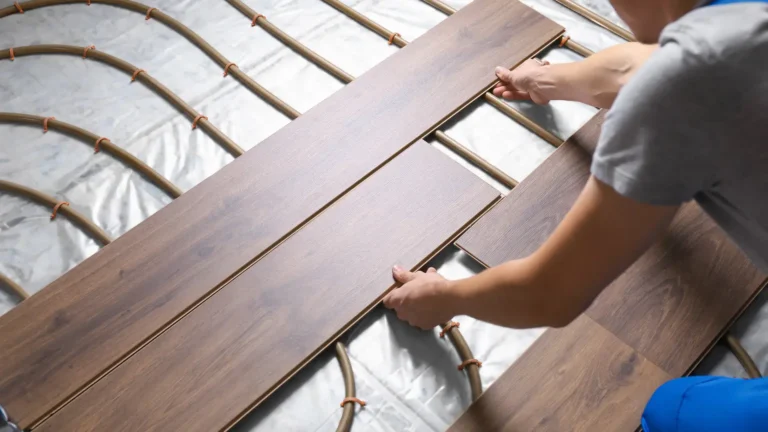

Warmth that rises evenly from the floor beneath your feet, with no drafts, no noisy vents, and no cold spots in the corners of a room — that is the experience radiant floor heating delivers. Instead of pushing heated air through ducts, this system warms the surfaces and objects in a space directly, creating a steady, comfortable temperature from the ground up. It is one of the most efficient and comfortable ways to heat a home or business, and it is a system we install, service, and maintain with care.
How Radiant Floor Heating Works
Radiant floor heating operates on a simple principle: heat naturally radiates from a warm surface to cooler surrounding objects and people. Rather than relying on convection to circulate warm air, a radiant system uses the entire floor as a low-temperature heat emitter. This means the heat is distributed uniformly across the room instead of collecting near the ceiling, which is a common inefficiency with forced-air furnaces.
There are two primary types of radiant floor systems. Hydronic systems circulate warm water through a network of flexible tubing installed beneath the floor, drawing heat from a boiler or water heater. Electric systems use resistance cables or heating mats laid under the flooring surface. Hydronic setups are generally more cost-effective to operate for whole-home heating, while electric systems are often ideal for smaller areas such as bathrooms, additions, or spaces where running new water lines is impractical.
The Installation Process From Start to Finish
Installing a radiant floor system is a methodical process, and getting each stage right is what ensures decades of reliable performance. When you choose Larry's Plumbing, Heating and Cooling, we walk through the project in a clear, logical order so you always understand what is happening beneath your floors.
- Assessment and design: We evaluate your space, insulation, flooring type, and heating needs to determine the correct tubing or cable layout and the right heat source for the job.
- Subfloor preparation: We clean and level the subfloor, then add insulation below the heating elements so heat travels upward into the room instead of downward into the ground.
- Laying the heating elements: We install the hydronic tubing or electric mats in a carefully spaced pattern that matches the room’s heat load, securing everything to prevent shifting.
- Connecting the system: For hydronic setups, we tie the tubing into the boiler or water heater with a manifold that controls flow to each zone. For electric systems, we wire the mats to a dedicated thermostat.
- Testing and sealing: We pressure-test hydronic lines and verify electrical continuity before covering anything, so problems are caught early rather than after the floor is finished.
- Floor finishing: Once everything checks out, the floor covering — tile, stone, engineered wood, or another approved material — is installed over the heating layer.
Technical Details That Matter
The performance of a radiant floor system depends on precise engineering. Hydronic tubing is typically made from cross-linked polyethylene, known as PEX, which resists corrosion and handles the constant temperature cycles of a heating system without degrading. Water temperatures in a radiant loop usually run between 85 and 140 degrees Fahrenheit, far lower than the near-boiling temperatures in a traditional radiator, which is a major reason these systems are so energy-efficient.
Zoning is another important technical advantage. Because each area can have its own thermostat and manifold loop, you can heat a living room during the day and keep bedrooms warm at night without wasting energy on unused spaces. Proper insulation beneath the tubing, correct spacing of the loops, and accurate boiler sizing all work together to keep operating costs low and comfort high. These are the details we account for on every installation.
Where Radiant Floor Heating Fits Best
Radiant heating suits a wide range of settings. In residential homes, it is popular in bathrooms and kitchens where tile floors would otherwise feel cold underfoot. It works beautifully in basements, sunrooms, and additions that existing ductwork cannot reach efficiently. For open-concept homes with high ceilings, radiant floors solve the problem of warm air rising and leaving the living space cool.
Commercial and specialty spaces benefit as well. Retail showrooms, medical offices, workshops, and garages all gain from the quiet, even heat that a radiant system provides. Because there are no blowers moving dust and allergens through the air, radiant heat is also a strong choice for anyone concerned about indoor air quality. We match the system type and design to each building’s specific demands.
Why Work With Larry's Plumbing, Heating and Cooling
We are a family owned full service plumbing, heating and cooling business that has been in business since 1982, and that long history means we have installed and serviced radiant systems through many generations of technology. We service all makes and models, so whether you are adding a new system or maintaining an existing one, we have the experience to keep it running right.
We also make the process straightforward. We offer free estimates and financing to help you plan the project on your terms, and we provide 24/7 emergency service if something ever goes wrong with your heating when you need it most. Radiant floor heating is a long-term investment in comfort, and at Larry's Plumbing, Heating and Cooling we treat it that way — with honest advice, careful workmanship, and dependable support throughout Vermillion and Yankton, SD and the surrounding communities. Reach out today to learn whether a radiant floor system is the right fit for your space.