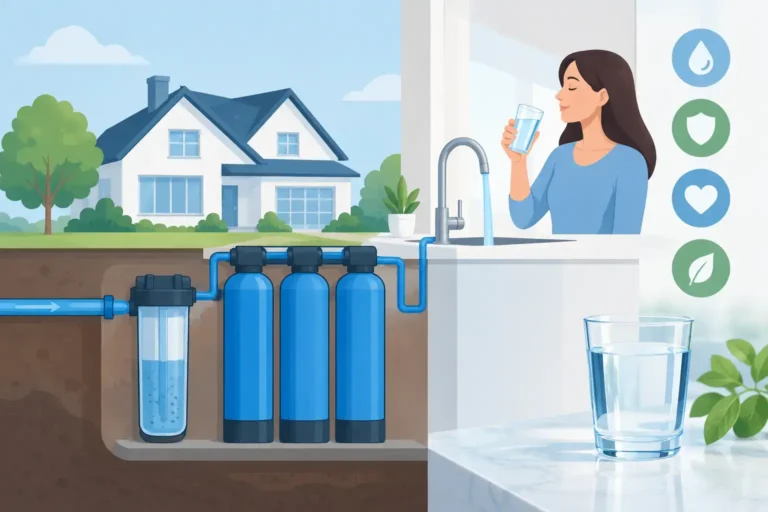

A glass of water can look perfectly clear and still leave spots on dishes, dry out skin, carry a chlorine smell, or create buildup inside fixtures and appliances. Whole house water filtration treats water as it enters the home, so every tap, shower, laundry load, water heater, and water-using appliance receives treated water instead of only the kitchen sink.
For homeowners in Yankton, Vermillion, and surrounding southeastern South Dakota communities, the right system depends on the water coming into the property. City water and private well water can present very different concerns. A professional water assessment helps separate a nuisance issue from a condition that needs specific treatment.
What Whole House Water Filtration Actually Does
A whole-home system is installed on the main water line, typically near where water enters the house. From that point forward, water passes through one or more treatment stages before it reaches the plumbing system. That placement is what makes it different from a countertop filter, refrigerator filter, or under-sink drinking-water filter.
Sediment filtration protects plumbing components
Sediment filters capture suspended material such as sand, silt, rust particles, and scale debris. This is especially useful for homes with well water, aging supply lines, or water that occasionally turns cloudy after municipal work. Sediment may not always create a health concern, but it can clog faucet aerators, reduce shower pressure, wear on valve cartridges, and shorten the service life of appliances.
The filter size matters. A very fine filter may catch more particles, but it can also restrict flow or require frequent replacement if the incoming water carries significant sediment. A properly sized system balances filtration performance with the water volume a busy household needs.
Carbon filtration addresses taste and odor concerns
Activated carbon can reduce chlorine taste and odor, along with certain organic compounds that affect water’s smell or flavor. For many homes on municipal water, this is the stage people notice first. Showers may smell less like chlorine, drinking water may taste better, and laundry can feel less affected by treatment chemicals.
Carbon has limits. It is not a cure-all for every water condition, and it must be replaced or maintained on schedule. Once the media is exhausted, performance drops even though the system may still look fine from the outside.
Water softening is a separate, but related, solution
Hard water comes from dissolved minerals, most often calcium and magnesium. It can leave white scale on fixtures, make soap harder to rinse, reduce water-heater efficiency, and contribute to early wear in dishwashers, washing machines, and tankless water heaters. A standard sediment or carbon filter does not remove hardness minerals.
When hard water is the primary concern, a water softener or a treatment system designed specifically for hardness may be the better answer. In some homes, filtration and softening work together: one handles sediment, chlorine, iron, or odor, while the other manages mineral scale. The best setup is based on a water test and the household’s goals, not a one-size-fits-all package.
Choosing a Whole House Water Filtration System
The right equipment begins with understanding the source of the water. Municipal water is generally treated before it reaches the home, but it can still contain disinfectant odor, sediment, hardness minerals, or particles stirred up by work on nearby lines. Private wells require closer attention to minerals, iron, manganese, sulfur odor, sediment, and potential bacterial concerns.
Start with testing, not assumptions
A water test provides the information needed to select treatment that fits the property. It can identify hardness levels, pH, iron, manganese, total dissolved solids, and other conditions that may affect plumbing or water quality. If there is a concern about bacteria or a sudden change in taste, color, or odor, testing should address that concern directly rather than relying on a general-purpose filter.
For example, a rotten-egg smell may point to sulfur compounds or bacterial activity, while orange staining can indicate iron. Both may require more than carbon filtration. A UV disinfection system may be recommended for certain well-water applications, but UV treatment works best when sediment and cloudiness are handled first. It does not remove minerals, particles, or odors on its own.
Consider household demand and plumbing layout
A filtration system must keep up when several fixtures run at once. A unit that works well in a small home can become a source of low pressure in a larger household with multiple bathrooms, high-flow showers, laundry equipment, and outdoor water use. Flow rate, pipe size, water pressure, and peak demand all deserve attention during system selection.
Installation location matters, too. The system needs reasonable access for service, protection from freezing, and sufficient room for filter changes, salt storage when a softener is used, or media-tank maintenance. In South Dakota, equipment installed in an unheated area needs added planning to prevent freeze damage during severe winter weather.
Think about ongoing maintenance before installation
Every treatment system has maintenance requirements. Some filters need cartridges changed several times per year. Other systems use media that lasts longer but eventually requires replacement, cleaning, or professional service. Softeners need salt and periodic checks, while UV systems require annual lamp changes and occasional sleeve cleaning.
Lower maintenance is not always better if it means the equipment does not address the actual problem. The practical goal is a system that is effective, serviceable, and easy to keep on schedule. A technician should explain what will need attention, how often it is likely to be needed, and what signs indicate the system needs service.
Professional Installation Protects the Whole Plumbing System
Water treatment equipment becomes part of the home’s plumbing, not just another appliance set beside a sink. Correct installation includes shutoff valves, bypass capability, secure connections, proper drain routing when required, and enough space to service the system without disrupting the rest of the home. In some cases, pressure regulation or other plumbing corrections should be addressed at the same time.
A professional installation also avoids a common mistake: placing equipment where it treats only part of the house or creates a difficult service problem later. The goal is clean, dependable operation without unnecessary pressure loss or a tangle of valves that no one understands during an urgent plumbing issue.
Larry’s Plumbing, Heating and Cooling can help homeowners evaluate water concerns, explain practical treatment options, and install equipment with the same attention given to the rest of the plumbing system. Clear recommendations matter because a filter that is wrong for the water can become an expensive inconvenience instead of a useful upgrade.
Signs Your Home May Benefit From Water Treatment
Persistent spots on glasses, scale around faucets, dry-feeling skin, chlorine odor, metallic taste, orange or black staining, and recurring sediment in aerators are all reasons to investigate the water supply. So are repeated appliance issues involving mineral buildup, reduced water flow at fixtures, or a sudden change in water color or smell.
A sudden change deserves prompt attention, particularly for private well owners. Do not assume that a new odor or discoloration is simply a filter problem. Changes can come from the well, treatment equipment, plumbing corrosion, or the municipal supply, and the right response depends on finding the cause.
Keep the System Working After It Is Installed
A whole-home water treatment system should not be installed and forgotten. Record filter-change dates, keep a small supply of the correct replacement cartridges when appropriate, and watch for changes in pressure, taste, odor, or staining. Those changes can signal that a filter is loaded, treatment media is exhausted, or another water condition has developed.
Routine plumbing maintenance helps, too. Cleaning aerators, checking for fixture leaks, flushing a water heater when appropriate, and maintaining a softener can reduce the effects of sediment and scale throughout the house. Homes with well water may benefit from periodic retesting because water conditions can shift over time.
If your water is leaving clues on fixtures, affecting your appliances, or simply making everyday tasks less pleasant, start with answers rather than guesswork. A properly tested and professionally sized system can make the water in every room of the home easier on your plumbing, your equipment, and your daily routine.