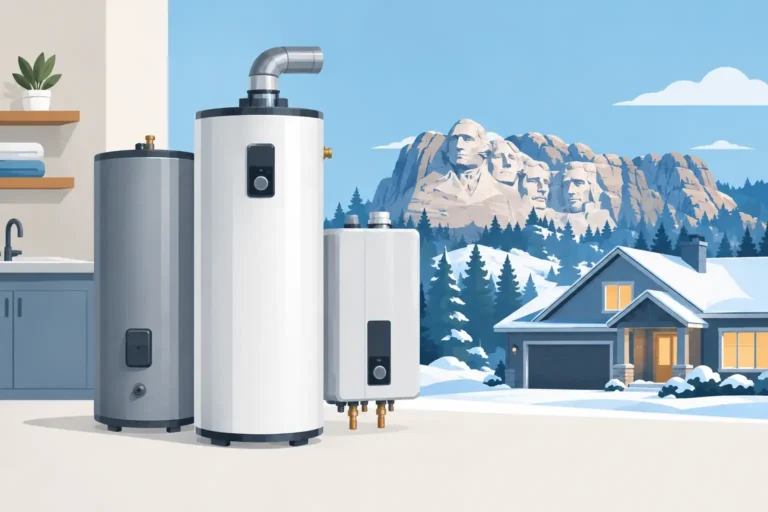
A water heater rarely asks for attention until a shower goes cold, a utility-room floor is wet, or the tank begins making unfamiliar noises. For homeowners in Yankton, Vermillion, and surrounding communities, choosing among the best water heaters means looking beyond a brand name or a sale price. The right unit must deliver enough hot water for the household, stand up to local water conditions, fit the home’s fuel source and venting, and operate reliably through a South Dakota winter.
What Makes a Water Heater One of the Best?
The best choice is not always the model with the highest efficiency rating or the largest tank. It is the water heater that matches your home, your daily demand, and your long-term budget. A family with several morning showers, laundry, and a dishwasher running before work has different needs than a one-person household in a smaller home. A rental property may call for a straightforward, durable tank unit that is easy to service, while a newer home with high hot-water demand may benefit from a properly sized tankless system.
Installation matters just as much as equipment selection. Gas piping, electrical capacity, combustion air, venting, drain connections, expansion control, and temperature-and-pressure relief protection all affect performance and safety. A water heater can be a quality product and still become a problem if it is not installed to suit the home.
Best Water Heaters by Type
Conventional storage-tank water heaters
For many South Dakota homes, a standard storage-tank water heater remains the practical choice. These units keep a reserve of heated water ready for use, typically in 40-, 50-, or larger-gallon capacities. They are available in natural gas, propane, and electric models.
A tank water heater is often the best fit when a household wants dependable performance, familiar operation, and a lower upfront installation cost than many high-efficiency alternatives. Gas tank models generally recover hot water faster than standard electric units, which can be helpful for active households. Electric tank models can be a sensible option where gas is unavailable or where a home’s existing setup favors electric service.
The trade-off is standby heat loss. Because the unit continually stores hot water, it uses energy even when no one is at the faucet. Tank capacity also matters. An undersized tank may leave the last person in line with a chilly shower, while an oversized unit can cost more to purchase and keep hot than necessary.
Tankless water heaters
Tankless, or on-demand, water heaters heat water as it passes through the unit rather than storing a full tank. Their main advantage is a continuous supply of hot water within the system’s flow-rate limits. They can also reduce energy use in homes where hot-water demand is moderate and intermittent.
Tankless systems are especially appealing for households short on mechanical-room space, owners planning to stay in the home for years, and families that regularly run out of stored hot water. They are compact, but they are not automatically the right answer for every home. A tankless unit must be sized for the number of fixtures likely to run at once, not simply for the number of people in the house.
Cold incoming water is a major consideration in southeastern South Dakota. During winter, a tankless unit must raise water temperature farther than it would in a warmer climate. That can reduce the gallons per minute it can supply at a comfortable temperature. A properly sized system may handle multiple showers and appliances well; an undersized one may struggle when someone starts the dishwasher during a shower.
Gas tankless installations can also require upgraded gas lines, specialized venting, condensate drainage for high-efficiency models, and electrical power for controls. Those requirements add to the initial project cost, but professional sizing and installation help prevent disappointing performance later.
Heat pump water heaters
Heat pump water heaters use electricity differently than standard electric tanks. Instead of creating all heat directly through electric elements, they pull heat from the surrounding air and transfer it to the water. This can make them highly efficient and a strong option for homeowners looking to reduce water-heating energy costs.
They work best in locations with enough surrounding air volume, such as a larger basement, utility area, or garage. Because they cool and dehumidify the space around them, that effect may be welcome in some basements and less desirable in a small enclosed room during winter. They also produce more operational sound than a conventional electric tank.
A heat pump water heater can be an excellent long-term investment, but the home needs the right location and electrical setup. It is worth reviewing the installation area before assuming this technology is a drop-in replacement for an existing electric tank.
Indirect water heaters
Homes with a properly sized boiler may have another efficient option: an indirect water heater. Rather than relying on its own burner or electric elements, an indirect tank uses the boiler’s heat source to warm domestic hot water through a heat exchanger.
This approach can provide substantial hot-water capacity and may make sense when a boiler is already being installed or replaced. It is not a universal solution, however. Its performance depends on the boiler, controls, piping design, and household demand. For the right hydronic-heating home, it can be a durable and effective system.
How to Size a Water Heater Correctly
Sizing is where many water-heater decisions go wrong. A larger tank is not always better, and a tankless unit with a strong marketing claim may not deliver the needed flow rate in winter. The goal is to match the system to peak demand.
For tank-style water heaters, technicians consider the first-hour rating. This estimates how many gallons of hot water a unit can provide in the first hour of heavy use, accounting for stored water and recovery time. A household that uses two showers, a dishwasher, and laundry close together may need more first-hour capacity than its tank size alone suggests.
For tankless models, the key figures are expected flow rate and required temperature rise. A shower, kitchen faucet, washing machine, and dishwasher each use water at different rates. If two showers may run at the same time, the unit needs enough capacity to heat that combined flow under local winter conditions.
Before replacement, it also helps to consider future changes. A finished basement, a growing family, a new soaking tub, or an accessory dwelling space can all increase hot-water demand. Planning for real use patterns is more valuable than choosing based on a single household-size chart.
Fuel Type, Efficiency, and Installation Costs
Natural gas is common in many homes and can offer quick recovery and strong performance for high-demand households. Propane can serve homes without natural-gas access, though fuel costs and tank arrangements should be considered. Electric water heaters avoid combustion venting but may have higher operating costs depending on local utility rates and household use.
Higher-efficiency equipment often costs more at installation. That does not make it a poor value. The question is whether the expected energy savings, equipment life, space benefits, and comfort improvements justify the additional investment for your home. Financing can also make a needed replacement more manageable, particularly when a failing water heater creates an unplanned expense.
It is also wise to account for required upgrades. A new high-efficiency gas unit may need different venting. A tankless water heater may need gas-pipe changes. A heat pump model may need dedicated electrical work and adequate surrounding space. Honest project planning identifies those details before installation day, not after the old unit has been removed.
Maintenance Protects Your Hot-Water Investment
Even the best water heaters need routine attention. Sediment can collect in tank-style units, especially where mineral content is present, reducing efficiency and contributing to popping or rumbling sounds. Anode rods gradually wear down as they protect the tank from corrosion. Temperature-and-pressure relief valves, venting, gas connections, and drain systems also deserve periodic inspection.
Tankless water heaters need maintenance as well. Their heat exchangers can accumulate scale, and flushing may be necessary to maintain efficiency and flow. If a unit displays an error code, produces inconsistent temperatures, leaks, or has unusual combustion-related odors, it should be checked promptly rather than repeatedly reset.
Regular service helps catch a weakening component before it turns into a water-damage emergency. It also gives homeowners a clearer picture of whether a repair is sensible or whether replacement is the more reliable path.
When Replacement Should Not Wait
A water heater near the end of its expected service life deserves attention before it fails completely. Rust-colored water, moisture around the base, visible corrosion, repeated repairs, rumbling, or inconsistent hot water can all signal trouble. A leaking tank generally cannot be repaired safely and will need replacement.
If a gas water heater has soot, flame irregularities, venting concerns, or a possible carbon-monoxide issue, treat it as a safety matter. Shut off the equipment if conditions appear unsafe and have a qualified professional inspect it. Prepared technicians can evaluate the water heater and the connected gas, venting, and safety components together.
The best water heater is the one that gives your household reliable hot water without creating a surprise in the utility room. A careful in-home evaluation from Larry’s Plumbing, Heating and Cooling can turn a stressful replacement into a clear decision, with the right capacity, fuel type, and installation plan for the way your home actually works.