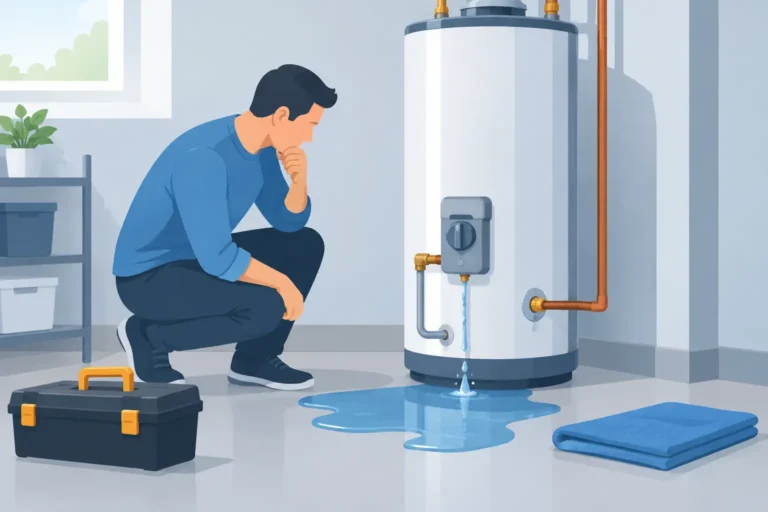

A puddle around the water heater is not a mess to put off until the weekend. A leaking water heater repair can range from tightening a connection to replacing a corroded tank, and the right response depends on exactly where the water is coming from. Acting quickly protects flooring, walls, stored belongings, and the equipment itself.
For homeowners, landlords, and business owners in Yankton, Vermillion, and surrounding southeastern South Dakota communities, the first goal is simple: stop unnecessary water damage without creating a safety issue. Water heaters combine water, pressure, electricity or gas, and very hot surfaces. A careful diagnosis matters.
What to Do When Your Water Heater Is Leaking
Start by confirming that the water is actually coming from the water heater. Condensation can collect on a cold tank in a humid basement, and a nearby pipe, drain, or appliance may be the true source. Wipe the area dry, then look for fresh water around fittings, valves, and the bottom of the tank.
If water is actively flowing or the puddle is growing, turn off the cold-water supply valve above the heater. On most systems, this is a handle or lever on the incoming cold-water pipe. Do not force a stuck valve. If you cannot safely stop the water, shut off the building’s main water supply and call for emergency plumbing service.
Next, turn off the heater’s energy source. For an electric unit, switch off the correct breaker. For a gas unit, set the gas control to the off position if you can do so safely. If you smell gas, leave the area, avoid switches and open flames, and contact your gas utility or emergency service from outside the building.
Do not remove panels, loosen gas connections, or cap the temperature-and-pressure relief valve. Those components protect the system from unsafe operating conditions. A professional can determine whether the leak is a straightforward repair or a sign the water heater is at the end of its service life.
Where Water Heater Leaks Usually Begin
The location of the leak tells a technician a great deal. Water at the top of the unit often points to a plumbing connection, while water under the tank may point to internal corrosion. The distinction can mean the difference between a repair completed during one visit and a planned replacement.
Cold-water and hot-water connections
The pipes entering and leaving the top of the tank can leak at threaded fittings, dielectric unions, flex connectors, or soldered joints. Mineral buildup and years of expansion and contraction can weaken these points. In many cases, the connection can be repaired or replaced without replacing the entire water heater.
A leak at the top can also travel down the sides of the tank, making it appear that the tank itself has failed. Drying the unit and tracing the first signs of water helps avoid guessing.
Temperature-and-pressure relief valve
The temperature-and-pressure relief valve, commonly called the T&P valve, is a critical safety device. It opens if temperature or pressure rises beyond safe limits. Water dripping from its discharge pipe may mean the valve is worn, but it can also indicate excessive water pressure, an improperly sized expansion tank, or a water heater that is overheating.
Replacing the valve without checking the cause is not a lasting repair. A technician should test system pressure, inspect the expansion tank when one is present, and verify that the water heater’s controls are operating correctly.
Drain valve
Near the bottom of a tank water heater, the drain valve allows the tank to be flushed or emptied for service. A loose, damaged, or aging drain valve can drip slowly. This is often repairable, though the tank may need to be drained first. If the valve has been untouched for many years, it should be handled carefully because sediment and corrosion can complicate the work.
Condensation, venting, and nearby plumbing
High-efficiency gas water heaters, heat pump water heaters, and some venting arrangements can produce condensation. A blocked condensate drain or failed pump may leave water near the unit. Conventional gas models can also show moisture if venting problems cause flue gases to condense where they should not.
This is one reason a water heater leak should not be diagnosed by appearance alone. The visible water may be a plumbing issue, a drainage issue, or an equipment safety concern.
The bottom of the tank
Water collecting directly beneath a tank is the most concerning pattern. Sediment naturally settles inside a storage water heater over time. That sediment can contribute to corrosion and hot spots, eventually damaging the steel tank or its internal lining. Once the tank itself has rusted through, there is no dependable patch or coating that restores it.
A tank leak usually means replacement is the responsible choice. Continuing to operate it can turn a small seep into a damaging release of water with little warning.
When Leaking Water Heater Repair Makes Sense
Repair is often the practical option when the water heater is otherwise in good condition and the issue is external. A failed valve, leaking connector, loose fitting, faulty drain valve, or serviceable control problem may be corrected at a reasonable cost.
Replacement deserves serious consideration when the tank is leaking, rust is visible around the bottom seam, repairs are becoming frequent, or the unit is approaching the later part of its expected life. Traditional tank water heaters often last roughly 8 to 12 years, although water quality, maintenance, installation quality, and household demand can shorten or extend that range.
Age is not the only factor. A newer heater with a leaking connection may be worth repairing, while an older unit with internal corrosion can be a poor candidate for another repair. A clear assessment should include the leak source, tank condition, recovery performance, venting or electrical requirements, and the cost difference between repair and replacement.
Why Water Heater Leaks Need More Than a Quick Fix
It is tempting to place a pan under the heater, wrap a fitting, or wait for a convenient time. That approach can create bigger problems. Even a slow leak can damage subflooring, support mold growth, corrode nearby equipment, and raise utility bills as the heater works harder to maintain temperature.
With gas water heaters, professional service also includes checking combustion and venting conditions. With electric models, water near wiring or controls creates its own hazards. For rental properties and commercial spaces, an unexpected outage can also affect tenants, customers, sanitation, and daily operations.
Larry’s Plumbing, Heating and Cooling approaches water heater problems with the full system in mind. That means identifying the source of the water, checking the safety components that may have contributed to it, and explaining repair or replacement options in plain language.
Preventing the Next Water Heater Leak
No maintenance plan can prevent every failure, particularly when a tank reaches the end of its life. It can, however, reduce avoidable problems and provide warning before a small issue becomes an emergency. Annual inspection is especially useful for older units and homes with hard water or heavy hot-water use.
A professional maintenance visit may include inspecting connections and shutoff valves, checking the T&P valve and discharge piping, looking for corrosion, evaluating venting or electrical components, and flushing sediment when appropriate. Flushing is not always a cure for an aging tank, and a heavily neglected water heater must be evaluated carefully before disturbing built-up sediment.
It also helps to know where your main water shutoff is located and to keep the area around the heater accessible. A clear path gives technicians room to work and makes it easier to spot leaks early.
If your water heater is leaking now, shut off the water if it is safe to do so and arrange service promptly. A prepared technician can help protect your home or business, restore reliable hot water, and make sure the repair truly addresses the cause of the leak.