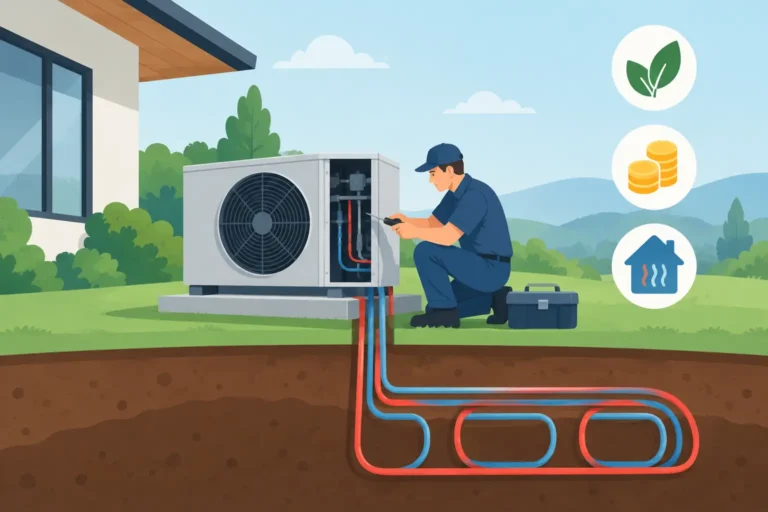

A geothermal system is built for the long haul, but it is not a system to set and forget. Proper geothermal heat pump maintenance helps your home stay comfortable through a South Dakota winter, keeps summer humidity under control, and catches small problems before they turn into a no-heat or no-cooling call.
Because much of a geothermal system is out of sight, homeowners sometimes assume there is nothing to maintain. The underground loop is generally low-maintenance, but the indoor heat pump, air-moving equipment, condensate drain, controls, and water connections still need regular attention. A little preventive care can protect one of the most efficient comfort systems in your home.
Why Geothermal Heat Pump Maintenance Matters
A geothermal heat pump does not create heat by burning fuel. It moves heat between your home and the ground through a buried loop system. That makes it highly efficient, but it also means airflow, water flow, refrigerant performance, and electrical controls all need to work together correctly.
When a filter is clogged or a blower is struggling, the system may run longer than it should. When a condensate drain begins to plug, water can back up around the unit. A minor circulation issue can reduce capacity and put unnecessary strain on pumps or other components. These issues do not always cause an immediate breakdown, but they can quietly raise operating costs and shorten equipment life.
For homeowners in Yankton, Vermillion, and surrounding communities, routine service also provides a practical advantage: a trained technician can identify a concern before severe weather makes it urgent. No one wants to discover a heating problem during a cold snap or an air-conditioning problem during a humid July week.
What You Can Do Between Professional Visits
Homeowner care is straightforward. It is mostly about keeping the system clean, accessible, and easy to inspect.
Check the air filter regularly, especially during the heating and cooling seasons. Depending on your filter type, household size, pets, and indoor air quality, it may need attention every one to three months. A dirty filter restricts airflow, which can affect comfort in every room and make the equipment work harder.
Keep supply registers and return grilles open and clear of furniture, rugs, boxes, or curtains. Closing vents to force more air into another room rarely solves the underlying comfort issue. It can disrupt airflow and may cause the system to operate outside its intended design conditions.
Take a quick look around the indoor unit a few times a year. Watch for water on the floor, damp insulation, unusual noises, warning lights, or a change in how often the system runs. If your geothermal unit has a visible condensate line, make sure it is not leaking or blocked. Do not remove panels or attempt electrical repairs yourself. Modern geothermal equipment contains high-voltage components, refrigeration circuits, and controls that require proper testing tools.
If your system uses a thermostat with scheduling features, confirm the settings match how your household actually uses the home. Large temperature setbacks are not always helpful with geothermal equipment. These systems are designed for steady, efficient operation, and recovering from a deep setback can sometimes use more supplemental heat than expected. The right approach depends on your system design, thermostat settings, and available backup heat.
What a Professional Geothermal Service Visit Includes
Annual professional maintenance is a sensible baseline for most residential geothermal systems. Homes with unusual comfort concerns, older equipment, high runtime, or accessory components may benefit from more frequent attention. A technician should tailor recommendations to the system, not apply a one-size-fits-all checklist.
During a thorough geothermal heat pump maintenance visit, the technician inspects the equipment’s operation in both heating and cooling modes when conditions allow. They check electrical connections, controls, safety devices, blower performance, and the condition of contactors, capacitors, and wiring. Loose connections and worn electrical components can create intermittent problems that are easy to miss until the system stops working.
The technician also evaluates airflow across the indoor coil. Proper airflow is essential for efficient heat transfer, whether the system is heating or cooling. If airflow is low, the cause could be a filter, blower issue, duct restriction, dirty coil, or a problem with the duct system itself.
Water flow is another key part of geothermal service. Depending on the equipment and loop configuration, this can include checking circulation pumps, flow controls, loop pressure, connections, and temperature differences. The underground loop is durable, but the components that circulate fluid and transfer heat need to perform correctly. A technician can spot signs of a leak, restricted flow, pump wear, or air in the system before performance drops significantly.
On systems that use refrigerant, professional service includes checking operating pressures and temperatures for proper performance. Refrigerant does not get “used up.” If the charge is low, the system may have a leak that needs to be located and repaired, rather than simply topped off. This is one reason accurate diagnosis matters.
Finally, the visit should include an inspection of the condensate system, cabinet, drain pan, and accessible duct connections. In cooling mode, geothermal units remove moisture from indoor air. A neglected drain can lead to water damage, musty odors, or an unexpected shutdown.
Signs Your System Needs Service Sooner
Do not wait for the annual appointment if the system’s behavior changes. Geothermal equipment is often quiet and consistent, so new noises or uneven comfort deserve attention.
Call for service if you notice any of the following:
- Rooms that are suddenly too warm or too cold despite normal thermostat settings
- Higher utility bills without a clear change in weather or household use
- Water around the indoor unit, a leaking drain line, or a musty smell nearby
- Grinding, rattling, buzzing, or repeated clicking during operation
- Frequent cycling, a system that runs constantly, or auxiliary heat operating more than expected
- A thermostat error message, tripped breaker, or unit that will not start
Some concerns have simple causes, such as a blocked filter or incorrect thermostat setting. Others require testing of airflow, electrical controls, water flow, or refrigerant operation. Calling early gives a technician more time to make the right repair before comfort is lost.
Maintenance Is Not the Same as a Repair
A maintenance visit is designed to inspect, clean, test, and adjust your equipment. It may reveal a worn part or developing problem, but replacing that part is a repair. Keeping those conversations separate helps homeowners understand what is preventive work and what needs approval as an additional repair.
The best service experience is clear and practical. You should know what was checked, what is working well, what may need attention later, and which issues should be addressed now. For an older geothermal system, replacement may eventually be worth discussing, particularly if there are repeated compressor, loop circulation, or control problems. Still, age alone does not determine the answer. Equipment condition, repair history, efficiency, and the home’s comfort needs all matter.
Protect the System Around the Unit
Your geothermal heat pump is connected to more than the ground loop. The thermostat, ductwork, electrical service, drainage, and sometimes supplemental heating all affect the result you feel indoors. If one room is consistently uncomfortable, the answer may be a duct issue, insulation gap, airflow imbalance, or thermostat location rather than a failure inside the geothermal unit.
That broader view is especially useful in homes that have been remodeled, added onto, or converted from another heating system. Changes to room use, doors, windows, or duct runs can alter the way conditioned air moves through the house. A qualified technician can help separate a system problem from a home-performance problem, so you are not paying for the wrong fix.
A geothermal system should provide dependable, quiet comfort for many years when it receives the attention it deserves. Schedule maintenance before the busiest heating or cooling season, keep an eye on the simple warning signs, and ask questions whenever something changes. At Larry’s Plumbing, Heating and Cooling, our team is ready to explain what we find in plain language and help keep your home comfortable when the weather turns.