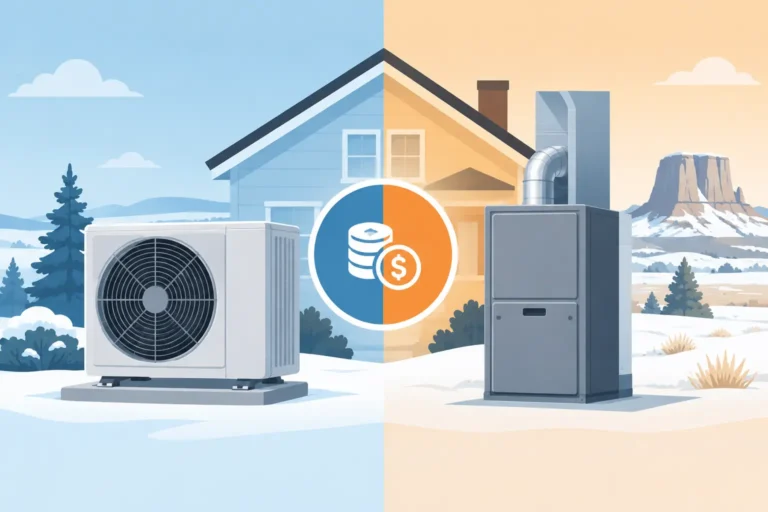

A heating replacement usually becomes urgent at the worst possible time: the furnace quits during a January cold snap, the repair estimate is high, and your household needs heat now. Comparing heat pump vs furnace costs can bring clarity, but the lowest equipment price is not always the lowest long-term cost for a home in Yankton, Vermillion, or the surrounding area.
A furnace and a heat pump solve the same comfort problem in different ways. A gas furnace creates heat through combustion. A heat pump moves available heat from outdoor air indoors, then reverses direction to provide air conditioning in summer. The right choice depends on your existing equipment, fuel access, insulation, ductwork, electrical capacity, household comfort preferences, and how the system will handle South Dakota winter weather.
Heat Pump vs Furnace Costs: Start With the Full Picture
The purchase price matters, but it is only one part of the decision. A properly planned replacement should account for installation work, energy use, maintenance, expected repair needs, and how long the equipment is likely to serve the home.
A standard gas furnace replacement is often the more straightforward project when a home already has a safe, usable gas line and forced-air ductwork. Costs rise when the job calls for gas-line modifications, chimney or venting changes, duct repairs, electrical work, or removal of older equipment. Higher-efficiency furnaces can also require updated venting and condensate drainage.
An air-source heat pump can cost more upfront than a basic furnace because it provides both heating and cooling. If it replaces an aging furnace and air conditioner at the same time, however, the comparison changes. You are pricing one outdoor heat-pump system and an indoor air handler or furnace connection against two separate pieces of equipment.
For either system, a contractor should size the equipment based on the home itself, not just match the old unit’s capacity. Oversized equipment can short-cycle, waste energy, and leave rooms less comfortable. Undersized equipment may struggle during extreme temperatures. A careful load calculation, airflow review, and duct inspection protect the investment better than choosing equipment by square footage alone.
What Drives Furnace Installation Cost?
Furnace costs vary widely because the installation conditions can vary just as much. Efficiency level is a major factor. A high-efficiency condensing furnace uses more of the fuel it burns, which can reduce operating costs, but it has different venting and drainage requirements than an older conventional model.
Fuel availability also matters. Natural gas is common in many areas, but not every property has a gas connection. Adding or extending a gas line requires professional planning and permitting. Propane furnaces have their own fuel-storage and delivery considerations. Electric furnaces generally cost less to install but can be expensive to operate during a South Dakota winter, depending on electric rates.
The condition of the duct system can add cost and should not be ignored. Leaky, undersized, or poorly balanced ducts make any new furnace work harder. A replacement project is a good time to address return-air issues, filtration, humidification needs, and rooms that have always run too cold or too warm.
What Drives Heat Pump Installation Cost?
Heat pumps come in several configurations, and that affects pricing. A central ducted heat pump works with a home’s duct system. A ductless mini-split uses wall-mounted indoor units and is often a strong option for additions, older homes without ducts, bonus rooms, or spaces with uneven comfort. Geothermal systems use stable ground temperatures and can offer excellent efficiency, but their installation requires a larger initial investment because of ground-loop work.
For most households considering an air-source heat pump, the key question is cold-weather performance. Modern cold-climate heat pumps can provide useful, efficient heat well below freezing. Still, during the coldest stretches of a South Dakota winter, the system may need supplemental heat. That support could come from electric heat strips, a boiler, or an existing gas furnace in a dual-fuel setup.
Electrical capacity is another cost factor. Heat pumps require dedicated electrical circuits, and a panel upgrade may be needed in some older homes. Outdoor-unit placement, refrigerant-line routing, condensate management, and duct modifications can also affect the final project price. A site visit is the only reliable way to identify these details before installation begins.
Operating Costs in South Dakota Winters
A gas furnace’s operating cost is tied largely to the local price of natural gas and its annual fuel utilization efficiency, or AFUE. For example, a 96% AFUE furnace converts most of the fuel it uses into heat for the home, while some heat is still lost through the exhaust process.
A heat pump’s efficiency is measured differently because it moves heat rather than creating it. In moderate weather, it can deliver several units of heat for every unit of electricity it consumes. That can make it very economical during fall, spring, and milder winter days. As outdoor temperatures fall, efficiency and heating capacity decline, so backup heat becomes more important.
That is why a heat pump is not automatically cheaper to run than a furnace in every South Dakota home. Utility rates, thermostat habits, the home’s weatherization, and the backup-heating strategy all matter. A tightly sealed, well-insulated home with favorable electric rates may see strong savings from a heat pump. A drafty home facing long subzero periods may rely heavily on supplemental heat, changing the math.
A dual-fuel system is often worth discussing. It pairs a heat pump with a gas furnace. The heat pump handles heating when outdoor conditions are favorable, while the furnace takes over when temperatures drop to a point where gas heat is the better comfort and cost choice. Proper controls are essential so the system switches at the right time.
Repairs, Maintenance, and Equipment Life
Furnaces and heat pumps both need regular professional maintenance. A furnace tune-up includes checking combustion, gas pressure, heat exchanger condition, venting, safety controls, electrical connections, and carbon-monoxide safety. These checks are not optional details. A furnace that is not burning or venting correctly can become a serious safety concern.
Heat-pump maintenance includes inspecting refrigerant performance, outdoor-coil condition, defrost operation, electrical components, drainage, airflow, and thermostat controls. Because a heat pump runs for both heating and cooling, it often has more annual operating hours than a furnace-only system.
Expected service life depends on installation quality, maintenance, usage, and local conditions. A well-maintained furnace commonly serves a home for many years. A heat pump can also provide long service, but its outdoor unit works through summer heat, snow, wind, and winter defrost cycles. In either case, preventive maintenance helps catch small issues before they become a no-heat emergency.
Which Option Makes Financial Sense for Your Home?
Choose a furnace when you want dependable high-output heat during severe cold, already have natural gas and workable ductwork, and plan to keep or separately replace your air conditioner. A high-efficiency gas furnace is a practical, proven choice for many southeastern South Dakota homes.
Consider a heat pump when your air conditioner is also nearing replacement, you want one system for heating and cooling, or you have rooms that are hard to condition with the existing system. It can be especially appealing for homes looking to reduce gas use or add efficient comfort to an addition, workshop, or converted space.
If the choice feels complicated, that is normal. The useful comparison is not just a quote for a furnace against a quote for a heat pump. It is a comparison of comfort, installation requirements, utility costs, backup heat, and the condition of the rest of the home. Larry’s Plumbing, Heating and Cooling can evaluate those details, explain the options in plain language, and help you choose equipment that is prepared for the weather outside your door.
Before the next heating failure forces a rushed decision, schedule an assessment of your current system, ductwork, and home comfort needs. A clear plan now gives you more control over cost, comfort, and winter peace of mind.